Nimble Blog

Who has enough time for the recommended amount of sleep a night?

April 15, 2013 by  
Filed under Keith Paine, Mind & Body, Nimble Blog, Nimble Team

  • Facebook
  • Twitter
  • LinkedIn
  • email

by Keith Paine

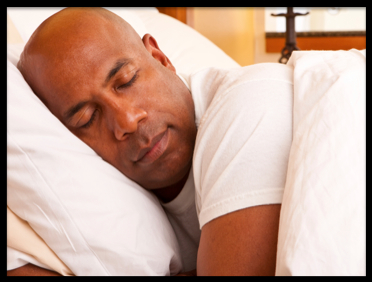
Especially living in New York City, as I do!  Culturally, we put more value on what we do, and much less value on the sleep we get.  Well, have you considered the negative toll that sleep loss may put on your body and mind?  Everyone’s individual sleep needs vary.  In general, most healthy adults are built for 16 hours of wakefulness and need an average of eight hours of sleep.  Recent surveys have found that more people in the U.S. are sleeping less than six hours a night, and that sleep difficulties visit 75% of us at least a few nights per week.  Chronic sleep loss will contribute to health problems such as weight gain, high blood pressure, and a decrease in your immune system’s power.  And if you are an exerciser, sleep is a key part of your program— recovery.  Sleep gives your muscles time to repair and rebuild after each sweat session.

Here are six really good reasons to catch those Zs :

1. Learning and memory: Sleep helps the brain commit new information to memory through a process called memory consolidation.

2. Metabolism and weight: Chronic sleep deprivation may cause weight gain, by affecting the way our bodies process carbohydrates and by altering levels of hormones that affect our appetite.

3. Safety: Sleep debt contributes to a greater tendency to fall asleep during the daytime. These lapses may cause falls and critical mistakes such as medical errors and road accidents.

4. Mood: No one likes a grump at work! Also, sleep loss can also leave you too tired to do the things you really like to do (go for the run, go out with friends, etc), which will affect your mood even further.

5. Cardiovascular health: Serious sleep disorders have been linked to hypertension, increased stress hormone levels and irregular heartbeats.

6. Disease Prevention: Sleep deprivation alters immune function, including the activity of the body’s “killer“ cells. Conversely, catching up with sleep helps all immune function, so your body will fight disease better.

Remember, the proper amount of sleep each night is necessary to face the world with your best foot forward.  Sleep will help you on the road to good fitness, good eating and good health!

  • Facebook
  • Twitter
  • LinkedIn
  • email

Hydration

  • Facebook
  • Twitter
  • LinkedIn
  • email

“Water is a critical element of the body, and keeping the body adequately hydrated is a must to allow the body to function.” – Melissa Stöppler, MD, on MedecineNet

As most of us know from junior-high school biology, our bodies are made up of mostly water. So, knowing how much water we need to drink to stay properly hydrated can seem confusing. If we have so much water in our bodies, then why do we have to keep replenishing it?

The answer, in part, lies in the fact that our bodies use water on a cellular level. That means that every ounce of tissue, every muscle, every organ—basically almost everything in us—is composed on the most basic level by water. As our bodies are always changing and evolving (or the opposite), our hydration levels can vary greatly.  Here are some of the key ways we are constantly losing water :

• Breath! Humidified air leaves your body every time you exhale.

• Sweat—especially when you exercise.

• Eliminating waste.

So, if we’re losing water all the time from basic body functions, common sense tells us we have to constantly replenish. Here are some basic daily water requirement levels. Since most adults weigh between 100 and 250 pounds, these standards from MedecineNet should give you a good general idea on how much water to drink daily:

• If you weigh 100 pounds – 50 ounces minimum, a quart and a half a day

• If you weigh 150 pounds – 65 ounces minimum,  2 quarts daily

• If you weigh 200 pounds – 70 ounces minimum, over half a gallon a day

• If you weigh 250 pounds – 75+ ounces minimum

And so on. Keep in mind these are minimum daily requirements. And if you add in other factors like exercise, sickness, dehydration from diuretics such as coffee and tea, we all definitely have some hydrating to do. On more factor: winter air is dryer air, so it probably makes sense to kick up your hydration this winter. If you have additional questions, email us at info@nimblefitness.com, or find us on Facebook.

  • Facebook
  • Twitter
  • LinkedIn
  • email

Why We Train.

November 15, 2012 by  
Filed under Keith Paine, Mind & Body, Nimble Blog, Nimble Team

  • Facebook
  • Twitter
  • LinkedIn
  • email

by Keith Paine

For most of us, exercise is a compartmentalized activity. It’s a thing we do 2-3 times a week before work. It’s a chance to focus on ourselves and on the way we want to feel. It’s an opportunity to get back into our bodies and away from the stresses of work and life.

Sometimes life rears its head, however, and shakes us out of our routines. When a big storm like Sandy hits, our lives are upended, and we’re reminded of what’s truly important. When that happens, our idea of “fitness” takes on a new meaning.

Fitness could be defined as the ability to walk up and down 23 flights of stairs in the dark with a fully packed bag and bottles of water—as one of our clients did–and realizing that it wasn’t that hard. Fitness could be loading heavy boxes of supplies for a relief effort, as another client did, and finding she could do it for hours without injury. Maybe true fitness is the ability to make better choices. Maybe it’s the ability to act–reaching out to a community when your parents have lost their house, or just offering to help in any way you can.

Being fit enough to help others as well as yourself. Having the ability to overcome stressful situations. Realizing that the training you do has benefits that you weren’t aware of. Maybe true fitness is just being able to handle whatever life throws at us.

-Namaste

  • Facebook
  • Twitter
  • LinkedIn
  • email

Operation Chew!

June 22, 2012 by  
Filed under Keith Paine, Nimble Blog, Nimble Team

  • Facebook
  • Twitter
  • LinkedIn
  • email

The Nimble team is taking charge of a vital aspect of nutrition that few people talk about: chewing your food!

Let’s face it; most of us, especially in New York City, eat our meals much too quickly. As soon as our food is put in front of us, we can’t help but shovel it into our stomachs as fast as possible. Nimble is taking a stand against this societal habit and asking you to slow down and chew your food. Make a conscious effort to chew properly and eat much slower. This is vital for preparing those life-supporting nutrients and enzymes to enter your digestive tract so they can do their job.

Simply put; chewing your food 20-30 times per mouthful will make a huge difference in the way you digest your meals and how your body processes that food. Your body will repay you in several ways, including:

1) People who chew more consume 80 less calories per meal. 80 calories may not seem like much but it adds up. You could potentially reduce your total weekly calorie intake by over 1600 calories, just by chewing more!

2) Chewing your food activates the salivary glands, which in turn speeds up the digestion process. This makes it easier to convert food into energy and also prevents you from feeling too full.

3) Overeating is a big problem. Chewing gives your body time to feel satisfied and allows it to recognize when you have had enough.

Convinced yet? Try chewing 20 times per mouthful at your next meal and see how you feel. Being mindful while eating allows you to truly enjoy the process of eating! Each bite is a gift, so treasure it. Chew baby chew!

  • Facebook
  • Twitter
  • LinkedIn
  • email

Life Assessment

  • Facebook
  • Twitter
  • LinkedIn
  • email

by Keith Paine

Springtime is traditionally a period of renewal for most of us, a fresh start. It can also be a good time to step back from the day-to-day pressures we all face, and do a bit of self-assessment on a broader scale. Where were you last year at this point? And how do you feel now, in comparison? What are the different aspects of life that you use to measure your progress? All tricky questions, especially the last one. There are a lot of numbers we can use to define success: money gained, miles run, pounds lost, etc. Are these superficial numbers, that change so easily, really a way to measure how we are?

Scientific research continually suggests what spiritual advisors have known for a very long time: true well-being is measured along a different, much deeper set of guidelines. Values, such as commitment to a cause, the freedom to act, and connection to others, are continually mentioned as the key determining factors to long-term happiness. Of course, these values are much harder to quantify, and they often exist independently of each other. How often do we sacrifice one of these factors to concentrate on another? Much like our physical health, it does not help us to focus on one thing to the exclusion of others. If your nutrition is terrible, it’s going to negatively affect your exercise, digestion, sleep, and so on. So it is with happiness. It’s in the balance of these major factors–commitment, freedom and connection–that well-being seems to be found.

Take a moment this week to assess yourself on your participation in these deeper values. Identifying those gaps in your life—and working to fill them—may be the surest path we have towards personal fulfillment.

  • Facebook
  • Twitter
  • LinkedIn
  • email

Q: IS THE SUN GOOD FOR YOU?

  • Facebook
  • Twitter
  • LinkedIn
  • email

By Keith Paine

A: To scientists, the answer to this question is a bit of a paradox. Radiation from the sun is both the leading cause of skin cancer and our major source of Vitamin D. We’ve all heard of the dangers of too much sun exposure, yet Vitamin D derived from the sun actually reduces the risk of many cancers, as well as being an essential strengthener of your immune system, skin, bones and teeth. Not to mention that Vitamin D increases
levels of serotonin, which means getting us in a better mood. Those of us who live in the Northern Hemisphere, not surprisingly, are more in need of sunlight then our southern-hemisphere neighbors.

Here are some keys for getting some safe sunshine :

*Avoid direct, unprotected exposure to the sun when it is most intense, from the hours of 10am to 3pm in the summer.

*10-15 minutes of exposure to direct sunlight without sunscreen, as long as it’s not at the hottest time of day, is generally accepted as being enough exposure to get the  benefits of sun without endangering your skin.

*Use sunscreen otherwise, and re-apply often, even with the products that claim they are water- and sweat-proof. Any product with an SPF of 30 or above is generally offers the same amount of protection.

If you want to read more, please visit the links below.

Why the sun is good for you?
More Sun Exposure May Be Good For Some People.

  • Facebook
  • Twitter
  • LinkedIn
  • email

To Ice or To Heat?

  • Facebook
  • Twitter
  • LinkedIn
  • email

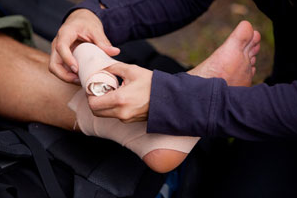
…that is the question, at least when we’re talking about injuries. Though there is often a lot of public confusion about whether to ice or heat an injury, fortunately the experts are pretty clear.

First, it’s important to know whether the injury is acute or chronic. An acute injury is one that results in sharp pain and is usually caused by a traumatic event. A chronic injury is one that is recurring and usually a duller pain.

Here are some ground rules for using ice and heat in treatment of injuries:

*Always use ice after an acute injury has occurred. Ice will help reduce swelling and pain.
*You can also use ice for a chronic condition, but only after activity to reduce swelling.
*Heat should be used before physical activity, to warm muscle and connective tissue and stimulate blood flow.
*Never use heat after an injury has occurred—and never use heat after physical activity.
*Never use ice before physical activity.

Here are some other good tips for using ice/heat from an online medical blog:

*Before icing, put a small amount of oil on the area you’re going to ice, then cover with cloth before you put the ice pack on.
*Ice for a maximum of 20-30 minutes.
*For heating, warm is better than hot. Your skin should be checked at regular intervals to make sure it’s not burning.

-Keith Paine

  • Facebook
  • Twitter
  • LinkedIn
  • email

Love and Attachment

February 11, 2010 by  
Filed under Keith Paine, Nimble Blog, Nimble Team

  • Facebook
  • Twitter
  • LinkedIn
  • email
keith-bio-headshot

Keith Paine

Ahh…Valentine’s Day. A celebration of love. A chance to spend cash on stuff that nobody needs, and often a cause of heartache. Love is tricky – both for those who are in a relationship and those who want to be in one.

If attachment breeds suffering, as the Buddha taught, then what should we do about love, the greatest attachment of all? Are we born to suffer if we don’t find a lover? We all long for the security of being with a person who’ll love us back. Our egos are satisfied when we feel loved. In our society, we’ve become attuned to acquiring things and judging our success by those things: money, a high-status job, a house. We can become attached to the idea of love in the same way, measuring our status as a person by our love lives. We’re flying high when our relationships go well, suffering when they fail.

Is it possible to experience love without attachment? Well…that depends on how we experience love. If we think of love as something that we have to get, than it can just as easily be lost, and we’ll suffer as a result. If instead we think of love as a way of being, the rules change. Love becomes active, not passive. Love becomes a daily experience, not something we have to find in someone else.

If this concept sounds kind of unrealistic, I believe it is much easier in practice. Whether it’s giving time to your kids or giving a donation to Haiti, we act with love all the time! Americans happen to be an incredibly generous people, especially when inspired by loss or need. Turn that same generosity towards yourself and those closest to you – in other words, act with love instead of searching for love- and you’ll be shocked at how much of it you get in return.

  • Facebook
  • Twitter
  • LinkedIn
  • email

Myth Buster: Is sweating the only way to burn calories?

October 6, 2009 by  
Filed under Keith Paine, Nimble Blog, Nimble Team

  • Facebook
  • Twitter
  • LinkedIn
  • email
A: No—and you might be surprised at how many calories you can burn by working consistently at a lower level of intensity, where you’re not sweating profusely.


The fact is, you’re burning calories all the time, even when you’re asleep. Those calories come from a combination of fat and carbs. The fat-to-carb ratio changes according to what your body needs, but the difference between a “fat-burning zone” and an “instant-energy carb zone” is less than you might think.

Here’s the deal: if you want to release weight, it’s not about where those calories come from, but how many you burn overall. So, the more active you are during your day, whether it’s a super-sweaty spin class, a challenging yoga session, or a climb up your office stairs, you’re still burning calories. Check out these numbers:

*Average calories burned for an average hour Pilates or Tai Chi class: 200-250 cal

*Average calories for an average hour of jogging (not sprinting) 400-500

If we do some simple math, we realize that there’s no difference, in calories at least, between 5 days of a medium intensity exercise, such as Pilates, Yoga, Tai Chi, or weight training, and 3 days of jogging. Now, jogging for an hour is more than most of us want or need to do, so create an ideal mix for yourself between lower and higher intensity exercise.

The key to really burning calories and releasing weight? Consistent exercise and good food choices.

  • Facebook
  • Twitter
  • LinkedIn
  • email

Keith Paine Performs at Rockwood Music Hall

September 10, 2009 by  
Filed under Keith Paine, News & Community, Nimble Team

  • Facebook
  • Twitter
  • LinkedIn
  • email

kp-sept-17 Live Thursday 9/17 @ Rockwood Music Hall

Join the Nimble community at the venerable Rockwood Music Hall for a bluesy acoustic set– Featuring my good friends Scott E Moore, soul singer and guitar player, and keys man Rob Clores, recently off the road with the Black Crowes. We’ll be joined of course by Malcom Gold on bass and Chris Benelli on percussion.

Time: 7:00 – 8:00pm (party to follow)
Where: Rockwood Music Hall / 196 Allen Street (just below Houston), New York City
For more info and to check out the music, please go to www.keithpaine.com

  • Facebook
  • Twitter
  • LinkedIn
  • email

The $5 cardio machine that really works!

  • Facebook
  • Twitter
  • LinkedIn
  • email

  • Facebook
  • Twitter
  • LinkedIn
  • email

Quick Headstand Tips.

July 2, 2009 by  
Filed under Get In Shape, Keith Paine, Videos

  • Facebook
  • Twitter
  • LinkedIn
  • email

Keith Headstand Pose from Nimble Fitness on Vimeo.

  • Facebook
  • Twitter
  • LinkedIn
  • email

WHY MEDITATE?

  • Facebook
  • Twitter
  • LinkedIn
  • email

keith-why-meditate

Meditation is a word that is loaded with resonance in our society. Say “meditation” and it conjures images of some enlightened yogi in a cave, levitating off the floor. Meditating seems impossible—like a dreamlike state of nirvana—so many of us reject it out of hand. We say, “I can’t do that” or “Why bother, it’s a waste of time to try.”

Why meditate? One good answer is to relieve stress. In our society, stress can be an ever-present partner, both a reaction to our environment and a response to our hectic lives. Stress affects us mentally and physiologically. The crazy thing about stress is that 90% of the stress we feel doesn’t affect us in real time–it’s about something that is going to happen or something that has already happened. It’s the reason that meditating using your breath is such an effective tool for relieving stress. Meditation is nothing more than the act of being totally present.

If meditation seems beyond your reach, I’d answer by saying that the truth is you’ve already meditated–many, many times. If you’ve ever lost yourself in a movie or a concert, you’ve done it. If you’ve ever been present at the birth of a child, a close friend’s wedding, or any other truly important event, you’ve connected to that place where there is no past, no future, and no worries–just an intense appreciation of now. It’s not something new you need to learn, it is something that you already do!

Meditation, at its essence, is simplicity itself: stop and focus on your own breath, anytime, anyplace. By simply focusing on your breath, you’re turning off your mind’s spin cycle of thoughts, worries, and errands. You’ll feel your breath start to slow down and even out. You’ll feel your breath move in your body, dropping from your shoulders down through your rib cage into your body’s power center, just below your navel. You’ll start to have new awareness of what’s happening around you. You’ll feel better! By focusing on your breath, you’re also naturally tapping into the parasympathetic part of your Autonomic Nervous System, the part that helps you rest and repair. It is always available to you. That’s meditation—that’s all!

Keith Paine

  • Facebook
  • Twitter
  • LinkedIn
  • email

3 Keys to Any Yoga Pose

  • Facebook
  • Twitter
  • LinkedIn
  • email

Untitled from Nimble Fitness on Vimeo.

  • Facebook
  • Twitter
  • LinkedIn
  • email

FLEX THOSE CREATIVE MUSCLES

  • Facebook
  • Twitter
  • LinkedIn
  • email

How often do you find time to work on your creative side? It’s not the easiest thing to do. Our lives are often consumed with day-to-day tasks and results-driven work. Time has become perhaps our most valuable commodity, as workdays become longer and vacation time shrinks. We spend most of our time reacting—to deadlines, demands, emails, texts and other stresses of modern life.

Making space for your creative self to emerge is an essential part of keeping balance and a sense of inner harmony. You’re giving free reign to an important part of who you are—your deeper, subconscious self.  You’re tapping into what’s often called the right brain, that part of you that makes new connections, that knows instead of thinks, that sees the whole picture instead of analyzing the parts. We all have the natural ability to tap into that self, but not many of us have had the experience of doing it on a consistent basis.  It’s a beautifully altered state—creating instead of reacting, free-flowing instead of analyzing.  You’ll discover abilities that you didn’t know you have. And you’ll feel the results of practicing creativity in every area of your life.

There’s really no limits, just self-expression. In essence, there’s no difference between building a chair, riding a wave, knitting a sweater or writing a song. It’s the same process at work. In that process is liberation—an opportunity to be your truest self.  And if you’re being your truest self, make it whatever you want it to be. Don’t self-edit so much, and don’t worry about results.  Enjoy the process! The journey is the reward.

  • Facebook
  • Twitter
  • LinkedIn
  • email